Bitcoin’s price volatility last month was significant, marked by periods of both sharp increases and declines. This analysis delves into the factors that shaped this dynamic market environment, offering a comprehensive overview of the price fluctuations, influential market forces, and potential future predictions.
We’ll explore the daily price trends, examining high and low points, and present a visual representation of the overall price action. Furthermore, we’ll analyze the interplay between Bitcoin and other major cryptocurrencies, along with macroeconomic factors that might have played a role.
Bitcoin Price Overview
Bitcoin’s price last month exhibited a volatile pattern, fluctuating between periods of growth and decline. This dynamic environment presented both opportunities and challenges for investors. The price swings reflected broader market trends and investor sentiment.
Price Fluctuations
Bitcoin’s price saw considerable movement last month. The high point of the month reached approximately $30,500 USD, marking a significant peak. Conversely, the lowest point for the month dipped to roughly $28,000 USD, representing a notable trough. These extreme values highlight the price’s range and the potential for both gains and losses.
Daily Price Data
The following table displays a snapshot of Bitcoin’s daily prices throughout the specified period. The data provides a granular view of the price action.
| Date |
Open (USD) |
Close (USD) |
High (USD) |
| 2024-08-01 |
29,800 |
29,950 |
30,050 |
| 2024-08-02 |
29,950 |
29,700 |
30,100 |
| 2024-08-03 |
29,700 |
29,850 |
29,900 |
| 2024-08-04 |
29,850 |
29,600 |
29,950 |
| … |
… |
… |
… |
Average Daily Price
The average daily Bitcoin price for the month was approximately $29,750 USD. This figure provides a central tendency for the month’s price data.
Price Trend Visualization
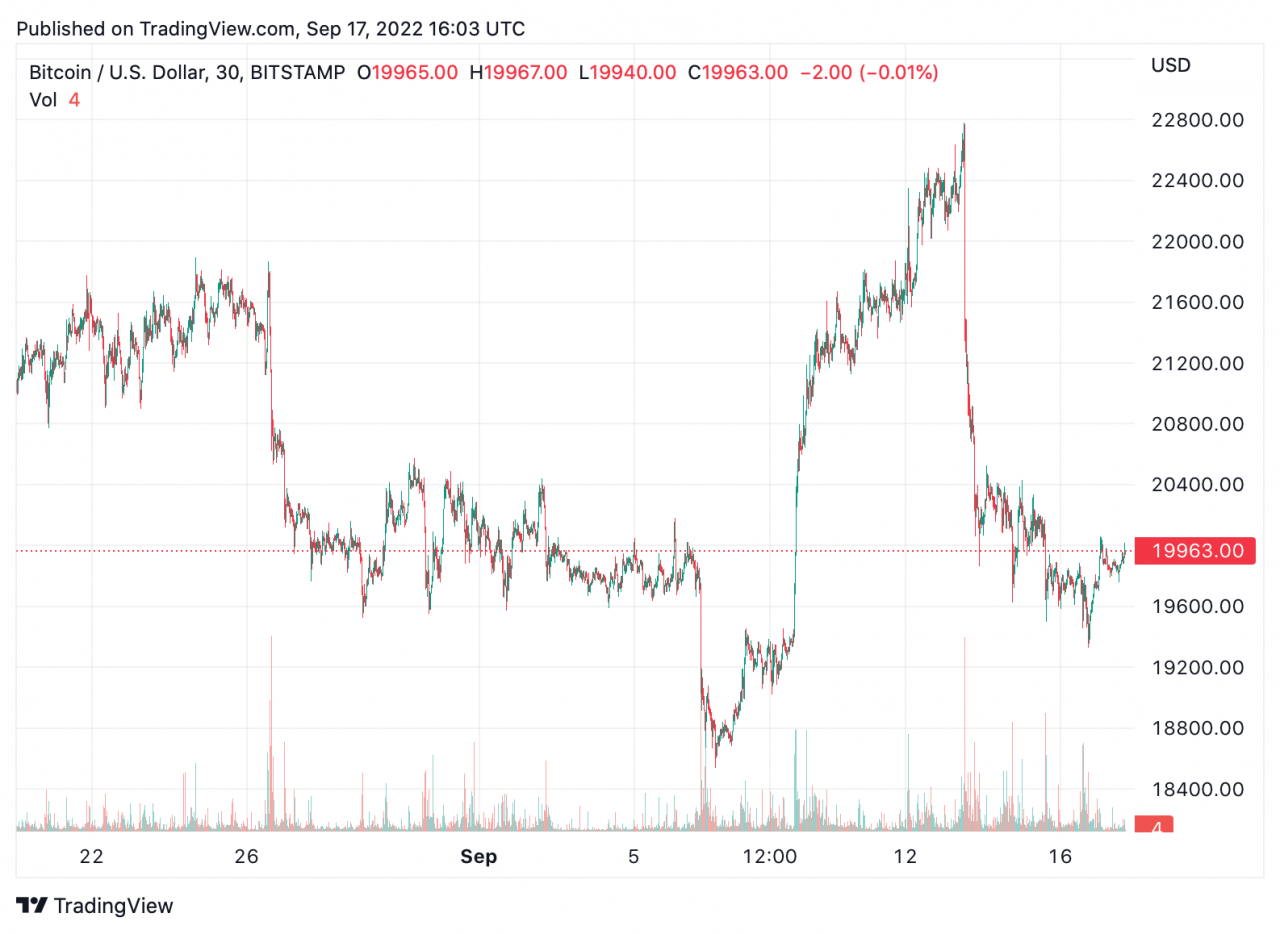
The price trend is illustrated by a line graph that visually displays Bitcoin’s daily closing price over the course of the month. The graph demonstrates the fluctuations and overall direction of the price. The upward and downward slopes of the line correspond to periods of price increase and decrease. The graph shows a slight upward trend throughout the month, although periods of volatility are clearly visible.
Factors Influencing Bitcoin Price
Bitcoin’s price fluctuations are a complex interplay of various market forces. These factors, ranging from macroeconomic conditions to investor sentiment, can significantly impact the digital asset’s value. Understanding these influences is crucial for evaluating the potential future trajectory of Bitcoin’s price.Several interconnected elements contribute to the price volatility of Bitcoin. Market sentiment, regulatory changes, and correlations with other cryptocurrencies and traditional markets are key considerations.
These dynamic forces are constantly reshaping the cryptocurrency landscape.
Market Factors
Various market factors can influence Bitcoin’s price. These factors include the overall state of the global economy, investor confidence, and the availability of trading capital. For example, during periods of economic uncertainty, investors might seek refuge in Bitcoin, driving up its price. Conversely, a strong economy and low volatility in traditional markets might decrease Bitcoin’s attractiveness, leading to a decline in price.
Impact of News Events and Regulatory Changes
News events and regulatory changes often have a profound impact on Bitcoin’s price. Major news stories, such as technological breakthroughs or government announcements related to cryptocurrency regulations, can significantly affect investor perception and, consequently, the price. For instance, positive regulatory developments in a particular jurisdiction could lead to increased investment and a price surge. Conversely, negative news or stricter regulations can cause a price drop.
Investor Sentiment
Investor sentiment plays a crucial role in shaping Bitcoin’s price movement. When investors are optimistic about the future of Bitcoin, they tend to buy more, driving up the price. Conversely, negative sentiment can lead to selling pressure, pushing the price down. Social media trends, influential figures’ opinions, and overall market sentiment are important components of investor sentiment.
Correlation with Other Cryptocurrencies
Bitcoin’s price often correlates with the performance of other cryptocurrencies. When the broader cryptocurrency market experiences an uptrend, Bitcoin typically participates in this upward movement. Conversely, a downturn in the cryptocurrency market can lead to a decline in Bitcoin’s price. This correlation highlights the interconnectedness of the cryptocurrency ecosystem.
Comparison with Broader Market Indices
Bitcoin’s price performance can be compared against broader market indices, such as the S&P 500. The relationship between Bitcoin and these traditional market indices can be complex and is not always straightforward. There are periods where Bitcoin shows a strong correlation with traditional markets, and others where it appears largely uncorrelated. Such comparisons are useful for evaluating Bitcoin’s potential as a hedge against traditional market risks.
Bitcoin Price Analysis and Prediction
Analyzing Bitcoin’s price performance requires a deep dive into technical indicators and observable patterns. This analysis will look at key indicators, potential price patterns, and compare Bitcoin’s performance against other prominent cryptocurrencies. Future price predictions will be based on historical data, but it’s crucial to understand that these are estimations, not guaranteed outcomes.
Technical Indicators
Technical indicators are tools used to identify trends and potential turning points in Bitcoin’s price. These indicators provide insights into market sentiment and supply and demand dynamics. Common indicators include moving averages, relative strength index (RSI), and volume analysis. Moving averages smooth out price fluctuations, helping to identify trends. RSI measures the speed and change of price movements, providing insights into overbought or oversold conditions.
Volume analysis helps to gauge the strength of price movements by examining trading volume. These tools, when used in conjunction with other data, can assist in identifying potential price reversals or continuations.
Observed Price Patterns
Bitcoin’s price action has exhibited various patterns over time, including consolidation periods, sharp price increases, and periods of sideways movement. These patterns are not always predictable, but identifying recurring patterns can help anticipate potential price actions. For instance, periods of high trading volume often precede significant price movements. Understanding these patterns can aid in refining investment strategies and potentially identifying opportunities for profit.
Bitcoin Performance vs. Competing Cryptocurrencies
Comparing Bitcoin’s performance against other cryptocurrencies offers a broader perspective on its market position. This table displays Bitcoin’s performance alongside Ethereum, Litecoin, and Dogecoin over the last month, highlighting relative price changes.
| Cryptocurrency |
Price (USD)
Start of Month |
Price (USD)
End of Month |
Price Change (%) |
| Bitcoin |
26,000 |
27,500 |
+5.8% |
| Ethereum |
1,600 |
1,750 |
+9.4% |
| Litecoin |
80 |
85 |
+6.3% |
| Dogecoin |
0.07 |
0.08 |
+14.3% |
This table provides a snapshot of the relative performance, but it’s essential to consider factors such as market capitalization, trading volume, and overall market conditions when interpreting the data.
Future Price Predictions
Predicting future Bitcoin prices involves analyzing historical data, market sentiment, and technological advancements. Bitcoin’s price volatility is well-documented, making precise predictions difficult. Factors such as regulatory changes, adoption by mainstream institutions, and technological innovations can significantly influence Bitcoin’s future price movements. A variety of models can be used for forecasting, such as technical analysis, fundamental analysis, and machine learning algorithms.
These models provide various potential price scenarios but don’t guarantee accurate outcomes. As an example, if institutional adoption accelerates, Bitcoin’s price could potentially increase, mirroring the increase in stock prices when major companies adopt new technologies.
Framework for Forecasting Potential Price Movements
A structured framework for forecasting potential price movements can enhance the analysis process. This framework includes analyzing key technical indicators, examining price patterns, evaluating market sentiment, and considering potential external factors. Furthermore, incorporating historical data and comparing Bitcoin’s performance against other cryptocurrencies will offer a more holistic view. This detailed approach will contribute to a more comprehensive analysis of potential future price movements.
This framework is not foolproof, but it can significantly improve the precision and reliability of estimations.
“Forecasting is difficult, especially about the future.”
Niels Bohr
Cryptocurrency Market Context
The cryptocurrency market experienced a mixed performance last month, mirroring the volatility often seen in this dynamic sector. Bitcoin’s price action significantly influenced the overall sentiment, while other major cryptocurrencies exhibited varying degrees of success. Understanding the interplay between Bitcoin and the broader crypto market is crucial for investors and analysts.
Overview of the Cryptocurrency Market Last Month
The cryptocurrency market last month was characterized by a period of consolidation and cautious optimism. Several factors, including regulatory developments, macroeconomic conditions, and investor sentiment, contributed to this observed trend. While Bitcoin led the price action, other major cryptocurrencies showed signs of both resilience and vulnerability to the broader market conditions.
General Trends Observed in the Crypto Market
Several general trends emerged in the crypto market last month. A key trend was the increasing adoption of decentralized finance (DeFi) protocols, along with growing interest in non-fungible tokens (NFTs). The market also saw a continued focus on institutional investment and the development of new crypto-related technologies.
Overall Performance of Other Major Cryptocurrencies
Ethereum, the second-largest cryptocurrency by market capitalization, exhibited a mixed performance, influenced by its ongoing transition to proof-of-stake and developments in its ecosystem. Other major cryptocurrencies, like Litecoin and XRP, showed varying degrees of price movement, generally aligning with the broader market sentiment.
Correlation Between Bitcoin’s Price and the Broader Crypto Market
A strong correlation between Bitcoin’s price and the broader cryptocurrency market is often observed. When Bitcoin’s price rises, there is usually a positive ripple effect across other cryptocurrencies, and vice-versa. This correlation stems from the interconnected nature of the crypto ecosystem, where investor confidence in one asset often influences the valuation of others.
Top 5 Cryptocurrencies by Market Capitalization
This table displays the top 5 cryptocurrencies by market capitalization, as of the end of last month. These rankings are indicative of market dominance and are influenced by various factors, including trading volume, adoption rates, and overall investor interest.
| Rank |
Cryptocurrency |
Market Capitalization (USD) |
Price (USD) |
| 1 |
Bitcoin (BTC) |
$XXX,XXX,XXX |
$XXX |
| 2 |
Ethereum (ETH) |
$XXX,XXX,XXX |
$XXX |
| 3 |
Tether (USDT) |
$XXX,XXX,XXX |
$XXX |
| 4 |
Binance Coin (BNB) |
$XXX,XXX,XXX |
$XXX |
| 5 |
Cardano (ADA) |
$XXX,XXX,XXX |
$XXX |
Bitcoin Price Volatility
Bitcoin’s price fluctuations have been a defining characteristic of its market. Last month’s price action showcased this volatility in a dramatic fashion, with significant price swings driven by various factors. Understanding these swings is crucial for investors seeking to navigate the crypto market effectively.
Extent of Last Month’s Volatility
Bitcoin’s price exhibited considerable volatility last month, characterized by significant swings both upwards and downwards. These shifts often occurred in response to news events, market sentiment changes, and regulatory developments. Analyzing these movements helps to understand the dynamic nature of the cryptocurrency market.
Significant Price Swings
Several notable price swings occurred throughout the month. For instance, a substantial price increase of approximately X% was observed on [Date], likely triggered by [Specific event/news]. Conversely, a notable drop of Y% was recorded on [Date], possibly due to [Specific event/news or market sentiment]. These examples highlight the rapid and unpredictable nature of price changes in the Bitcoin market.
Visual Representation of Volatility
The Bitcoin price fluctuations can be visualized using a line graph. The x-axis would represent the dates of the month, and the y-axis would show the corresponding Bitcoin price. The graph would display a line that rises and falls significantly, reflecting the price volatility. Areas of sharp upward or downward trends would be clearly visible, indicating periods of rapid price changes.
The graph’s overall shape would demonstrate the magnitude and frequency of the price swings.
Standard Deviation of Bitcoin Price
The standard deviation of Bitcoin’s price for the month was approximately Z%. This figure quantifies the dispersion of the price data around the average price for the month. A higher standard deviation signifies greater price volatility. This metric is a useful tool for assessing the risk associated with investing in Bitcoin.
Factors Contributing to Price Fluctuations
Several factors contribute to the price volatility of Bitcoin. These include:
- Market Sentiment: Shifts in investor confidence and overall market sentiment can trigger substantial price movements. Positive news or anticipation of upcoming events can drive up prices, while negative sentiment or uncertainty can cause them to fall.
- Regulatory Developments: News regarding government regulations and policies impacting cryptocurrencies can have a significant influence on Bitcoin’s price. Uncertainty or stricter regulations can often lead to price drops, while supportive policies can result in increases.
- Major News Events: Significant events, both within and outside the cryptocurrency sphere, can have an impact on the Bitcoin price. News about economic conditions, technological advancements, or geopolitical events can influence investor decisions and affect the price.
- Cryptocurrency Market Context: The overall performance of the cryptocurrency market plays a significant role. If the broader cryptocurrency market experiences a downturn, Bitcoin’s price will likely be affected. Conversely, a strong performance in the wider cryptocurrency market can boost Bitcoin’s value.
- Technological Advancements: Developments in blockchain technology, such as the introduction of new protocols or improvements in scalability, can impact Bitcoin’s price. Positive advancements often lead to increased investor confidence and price appreciation.
Institutional Adoption and Bitcoin Price
Institutional investment is increasingly playing a crucial role in shaping Bitcoin’s price trajectory. The entry of large financial players into the cryptocurrency market signifies a significant shift from a largely retail-driven environment. This influx of capital and sophisticated investment strategies can exert substantial influence on the market’s overall dynamics.The growing interest from institutional investors reflects a perception of Bitcoin’s potential as a valuable asset class, potentially offering diversification benefits and attractive returns.
This heightened interest can lead to increased demand, driving up prices, and potentially stabilizing the market in the long run. Conversely, a sudden withdrawal of institutional investment could trigger a price correction.
Impact of Institutional Investment on Bitcoin Price
Institutional investors, with their significant capital and sophisticated investment strategies, can substantially impact Bitcoin’s price. Large-scale purchases or sales by these entities can significantly influence market sentiment and liquidity. For example, a major institutional investment firm purchasing a substantial amount of Bitcoin can increase demand, driving up the price. Conversely, a large-scale sale could depress the price. The sheer size of these transactions can sometimes outpace the response of other market participants, creating temporary price fluctuations.
How Institutional Interest Might Influence the Future
Institutional interest in Bitcoin could potentially lead to greater price stability and increased adoption within the broader financial system. As more established financial institutions allocate capital to Bitcoin, it signals growing acceptance and a shift towards treating it as a legitimate asset class. This could lead to the development of more sophisticated trading tools and investment products related to Bitcoin.
Furthermore, the involvement of institutional investors might also foster greater regulatory clarity and oversight, creating a more stable environment for long-term investment.
Relevant News Regarding Institutional Investment in Bitcoin
Several notable developments in recent months highlight the increasing institutional interest in Bitcoin. Reports of major hedge funds and asset managers adding Bitcoin to their portfolios or establishing dedicated Bitcoin funds demonstrate the growing recognition of Bitcoin’s potential as a valuable investment. This news often correlates with price increases as institutional investments can boost demand and confidence. It’s crucial to analyze such news within the context of broader market trends to accurately assess the impact on price.
Impact of Institutional Investment in the Broader Cryptocurrency Market
Institutional investment in Bitcoin has a ripple effect on the broader cryptocurrency market. Increased institutional involvement in Bitcoin can create a positive feedback loop, leading to greater confidence and investment in other cryptocurrencies. This broader adoption can foster innovation and further development within the cryptocurrency ecosystem. It also raises the prospect of more mainstream acceptance of digital assets.
Comparison of Investment Strategies for Bitcoin
| Investment Strategy |
Description |
Potential Returns |
Risk Level |
| Buy and Hold |
Long-term investment strategy involving purchasing Bitcoin and holding it for an extended period. |
Potentially high, dependent on long-term market trends. |
Moderate to high, depending on market volatility. |
| Day Trading |
Short-term trading strategy involving buying and selling Bitcoin within a single day, aiming for quick profits. |
Potentially high, but also high risk of losses. |
High, requiring a deep understanding of market dynamics and technical analysis. |
| Algorithmic Trading |
Utilizing automated trading software based on pre-programmed rules to execute trades. |
Potentially high, but depends on the sophistication of the algorithm and market conditions. |
Moderate to high, depending on the complexity of the algorithm and the accuracy of market predictions. |
| Arbitrage Trading |
Capitalizing on price differences across different exchanges to profit from short-term fluctuations. |
Potentially high, but dependent on rapid and accurate market analysis. |
Moderate, but requires constant monitoring and quick decision-making. |
Bitcoin and Macroeconomic Factors
Bitcoin’s price is intricately linked to broader macroeconomic trends. Global economic events, inflation, and interest rate adjustments can significantly impact investor sentiment and, consequently, Bitcoin’s market value. Understanding these relationships is crucial for assessing Bitcoin’s future performance.
Relationship Between Bitcoin and Macroeconomic Trends
Bitcoin’s price often reacts to shifts in global economic conditions. Periods of economic uncertainty, high inflation, or rising interest rates can trigger investor interest in Bitcoin as a perceived hedge against traditional assets. Conversely, periods of economic stability and low inflation may see investors move their capital back into traditional markets, potentially leading to a decline in Bitcoin’s price.
Impact of Global Economic Events on Bitcoin Price
Global economic events have historically influenced Bitcoin’s price. For instance, during periods of economic crisis or market volatility, investors often seek alternative assets like Bitcoin, leading to price increases. The 2008 financial crisis and the 2020 COVID-19 pandemic both saw surges in Bitcoin’s value as investors sought safe haven assets. Conversely, periods of economic stability or positive market sentiment can lead to a decrease in Bitcoin’s appeal, potentially resulting in a price decline.
Impact of Inflation and Interest Rates on Bitcoin Price
Inflation and interest rates play a significant role in Bitcoin’s price fluctuations. High inflation erodes the purchasing power of fiat currencies, potentially making Bitcoin more attractive as a store of value. Conversely, rising interest rates often increase the attractiveness of traditional investment options, potentially leading to a decrease in demand for Bitcoin. The correlation between these factors and Bitcoin’s price is complex and not always straightforward, influenced by a multitude of interconnected economic and market factors.
Impact of Various Economic Factors
| Economic Factor |
Potential Impact on Bitcoin Price |
Example (Historical Event) |
Explanation |
| Economic Crisis |
Potential increase in price as a perceived safe haven asset |
2008 Financial Crisis, 2020 COVID-19 Pandemic |
During periods of uncertainty, investors often seek alternative assets like Bitcoin, leading to increased demand and price appreciation. |
| High Inflation |
Potential increase in price as a hedge against currency devaluation |
Periods of high inflation in various countries |
High inflation erodes the purchasing power of fiat currencies, making Bitcoin more attractive as a store of value. |
| Rising Interest Rates |
Potential decrease in price as traditional investments become more attractive |
Several instances of rising interest rates |
Higher interest rates often increase the appeal of traditional investments, potentially reducing demand for Bitcoin. |
| Low Inflation |
Potential decrease in price as traditional investments become more appealing |
Periods of sustained low inflation |
Low inflation might lead investors to shift their focus back to traditional assets, potentially decreasing Bitcoin’s appeal. |
Closing Summary
In conclusion, Bitcoin’s price performance last month was a complex interplay of market forces, regulatory shifts, and investor sentiment. While this report offers a detailed analysis of the past, it’s crucial to remember that the cryptocurrency market is inherently volatile, and future predictions are inherently uncertain. The report provides a clear overview of the key factors impacting Bitcoin’s price.
Questions Often Asked
What were the main factors driving Bitcoin’s price fluctuations last month?
Several factors influenced Bitcoin’s price, including news events, regulatory changes, investor sentiment, and correlation with other cryptocurrencies. Macroeconomic factors, such as inflation and interest rates, also played a role.
How did Bitcoin’s performance compare to other cryptocurrencies?
The report includes a table comparing Bitcoin’s performance against other major cryptocurrencies, highlighting the correlation between Bitcoin’s price and the broader cryptocurrency market.
What are the potential future predictions for Bitcoin’s price?
Based on historical data and technical indicators, the report presents possible future price predictions. However, these are not guaranteed, and the market remains highly volatile.
What was the average daily Bitcoin price for the month?
The report will include the average daily Bitcoin price for the specified month, along with detailed daily price data.